2026-06-02 00:00:00
Last updated: May 2026. Written by Borja Llopart, Senior Event Planner, CREA Group Events & DMC.
Booking corporate hospitality for the Madrid Grand Prix seems simple until you ask for the breakdown. Then the questions that really matter appear: which tickets, with what access, with catering or without, sitting next to whom, and what happens with everything that is not in the brochure. The difference between a hospitality programme that works and an invoice full of surprises almost always lies in what was not asked in time. Here I break down what a corporate F1 hospitality package really includes, what tends to be left out and ends up as a separate charge, and the orderly process for booking it without overpaying or falling short.
→ What corporate hospitality in F1 is (and how it differs from an expensive ticket).
→ What a professional package DOES include.
→ What it does NOT include and often becomes an unexpected charge.
→ The booking process, step by step.
→ How to tell whether the price you are quoted is reasonable.
Corporate hospitality is not buying expensive tickets. It is contracting a managed experience around the race with a business objective behind it: closing a relationship with a client, rewarding a team, impressing a prospect. The ticket is the support; the hospitality is everything else (the space, the attention, the catering, the logistics, the discretion) that turns a race day into a commercial tool.
This matters because it sets who should organise it. A ticket is bought on a website. A hospitality programme with a business objective is designed, and that is where the coordination work that separates a smooth day from one with loose ends comes in.
👉 See how we coordinate corporate hospitality in Madrid.
A well-built corporate hospitality package for the Madrid GP usually covers these elements. Worth seeing them listed in the proposal, not assumed:
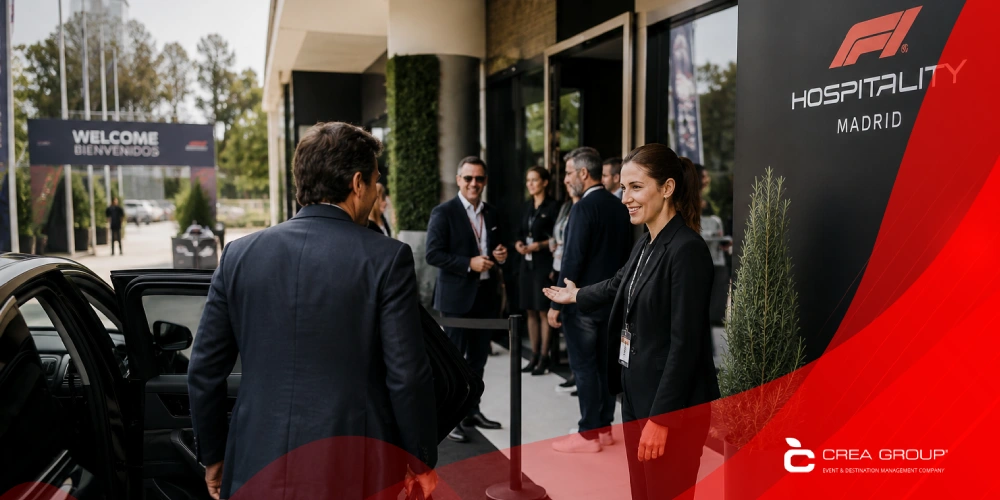
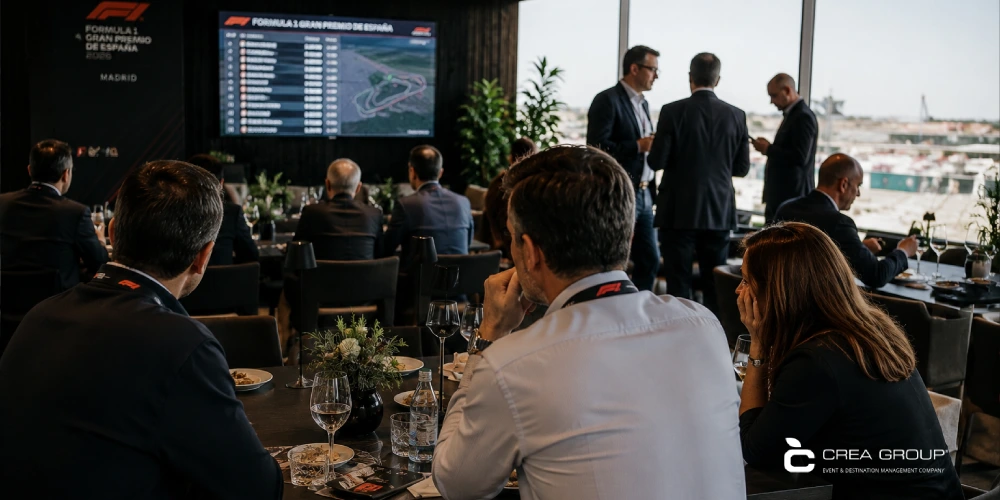
➝ Access to a hospitality area (such as a Paddock Club-style suite) with a circuit view or screens, depending on category.
➝ A defined catering programme: hours, service type and duration, not a generic "food included".
➝ Named accreditations for each guest, with the access level specified.
➝ Attending staff through the day (hosts, onsite coordination).
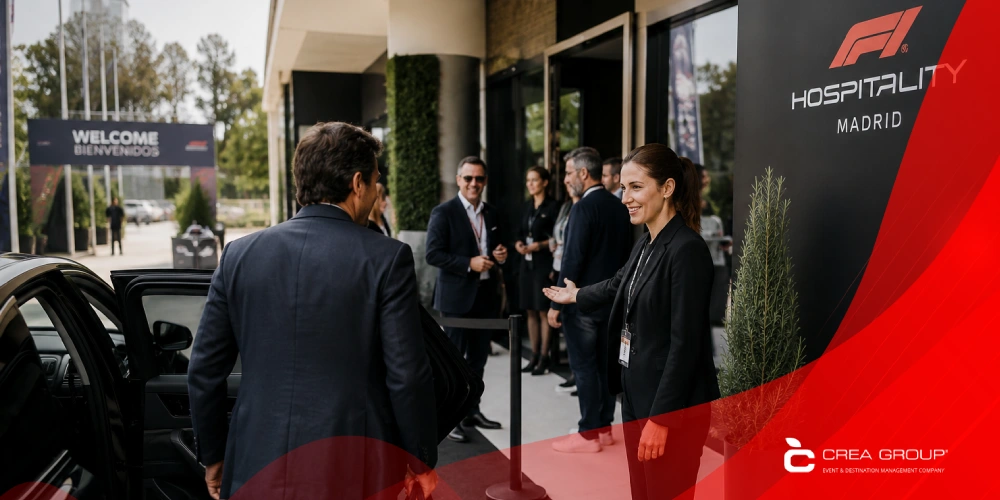
➝ Arrival and access coordination accounting for the weekend's road closures.
➝ A contact lead before and during the event, with a name and phone number.
The practical rule: if an element is not written in the proposal with its detail, it is not included. "Catering included" with no hours or service type is a phrase, not a commitment.
This is where the people who do not ask get caught out. Elements that frequently come separately:
➝ Transport and transfers from the hotel or meeting point to the hospitality area.
➝ Accommodation, which on Grand Prix dates spikes and sells out early.
➝ Complementary activities (dinner the night before, guided visit, paddock experience).
➝ Brand personalisation of the space (branding, signage, corporate gift).
➝ Insurance and contingencies specific to the group.
➝ Last-minute extras, which in a high-demand environment carry a surcharge.
None is a trick; they are legitimate services. The problem is finding out late. Asking "what does this price NOT include?" at the start is the most profitable question in the whole negotiation.
CREA Group coordinates corporate hospitality in Madrid with the full breakdown up front, what is included and what comes separately, before you sign anything. 19 years operating in the city teach you where the hidden costs usually sit.
👉 Ask us for the full breakdown of your programme.
Booking hospitality in an orderly way avoids most problems. This is the order I recommend:
1️⃣ Define the objective before the format. Is it to close with a client, reward a team, attract prospects? The objective decides the category, the size and the tone. Starting with "which package do I buy" is starting at the end.
2️⃣ Fix the number of guests and their profile. Ten top clients is not the same as forty sales reps. The profile determines the hospitality level and the need for discretion or networking.
3️⃣ Ask for proposals with a full breakdown. Included and not included, in writing. Compare apples with apples: two different prices usually differ because they cover different things.
4️⃣ Close early. On Grand Prix dates, availability rules. The sooner you confirm, the more real options you have and the less last-minute surcharge.
5️⃣ Coordinate the full logistics, not just access. Transfers, arrivals, accommodation if applicable, access plan B. This is where a local operator with city experience makes the difference.
Without a specific case in front of you it is impossible to give a figure, and be wary of anyone who gives one without knowing your brief. But there are three signs that a price is reasonable. First: it comes with a breakdown, not as a single number. Second: the supplier clearly distinguishes included from optional. Third: the price changes when you change the brief, which shows it is calculated on your case and not pulled from a generic rate. A price that does not move however you adjust the group is an alarm.
For the full picture of the hospitality categories at the Madrid GP, we develop it in the corporate hospitality F1 Madrid guide.
Element | Usually included | Usually separate |
Access to hospitality area | Yes | No |
Catering in the area | Yes (check hours) | No |
Named accreditations | Yes | No |
Onsite attending staff | Yes | No |
Transfers and transport | No | Yes |
Accommodation | No | Yes |
Pre-dinner / activities | No | Yes |
Space branding | No | Yes |
Last-minute extras | No | Yes (with surcharge) |
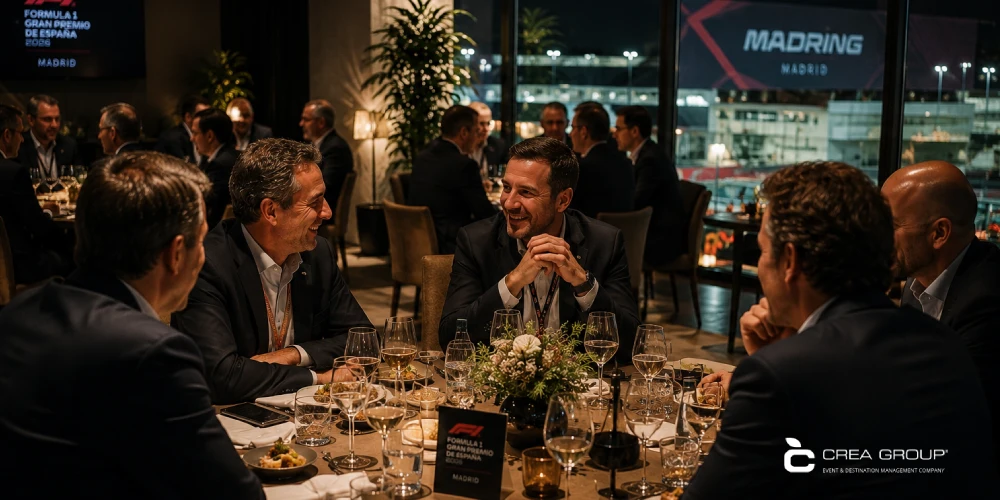
A professional package usually includes access to a hospitality area with a circuit view or screens, a catering programme with defined hours, named accreditations per guest, onsite attending staff, access coordination accounting for road closures, and a contact lead before and during the event. If an element is not detailed in writing in the proposal, it is best to assume it is not included.
Transport and transfers, accommodation (which spikes on Grand Prix dates), complementary activities such as a dinner the night before, brand personalisation of the space, specific insurance and last-minute extras frequently come separately. Asking what the price does NOT include at the start of the negotiation avoids most surprises.
The recommended order is: define the business objective before the format, fix the number and profile of guests, ask for proposals with a full breakdown of included and not included, close early because availability rules on GP dates, and coordinate the full logistics (transfers, arrivals, accommodation, access plan B), not just access to the area.
The price depends on the specific brief (category, number of guests, services included), so any figure without knowing your case is unreliable. A reasonable price always comes with a breakdown, distinguishes included from optional, and changes when your brief changes. A single price that does not move when you adjust the group is a sign to ask for more detail.
If your project fits Borja's focus (international incentives, hospitality events, complex operations in Madrid), get in touch about working together.
Last updated: June 2026.
Borja Llopart
Borja Llopart is the CEO and founder of CREA Group Events & DMC. With over 20 years of experience in the MICE industry, he specialises in organising corporate events, congresses, meetings and incentive travel programmes in Spain. He served on the Board of Directors of SITE Spain & Portugal for nearly seven years, including as President of the association, and has been a member of the Tourism Committee at Foment del Treball since 2020.
Connect with Borja on LinkedIn →
Madrid Office: Cl. de Ayala, 82, 5th Floor, Salamanca, 28001 Madrid
Find us on Google Maps
Barcelona Office: Carrer de Santaló, 10, 3-1, Sarrià-Sant Gervasi, 08021 Barcelona
Find us on Google Maps