2023-07-31 00:00:00

In the fast-evolving world of corporate events, staying ahead of corporate event trends 2026 is essential for planners aiming to deliver memorable and impactful experiences. As we look toward 2026, the landscape is shaped by a blend of technological innovation, attendee expectations, and a strong emphasis on measurable outcomes. Professionals searching for current corporate event trends, top corporate event trends, or latest corporate event trends will find that events are becoming more intentional, personalized, and sustainable. This shift reflects the needs of modern organizations in sectors such as technology, pharmaceuticals, automotive, finance, and consulting.
The future of corporate events points to a focus on creating value that justifies investment in time and resources. With budgets remaining tight for many teams, planners are prioritizing attendee engagement, ROI measurement, and experiences that foster genuine connections. Emerging corporate event trends highlight the integration of advanced tools and thoughtful design to meet these goals. Whether organizing corporate conference trends, trends in corporate meetings and events, or business event trends, the emphasis is on quality over quantity.
This comprehensive guide explores the corporate event trends 2026 that are set to dominate, drawing from industry research and expert insights. It provides practical strategies for company event planning trends and modern corporate event ideas to help event managers, marketing professionals, and human resources directors achieve their objectives.
Corporate event planners face increasing pressure to deliver experiences that not only inspire but also align with business goals. The upcoming trends in corporate events for 2026 address key challenges such as tight deadlines, budget constraints, complex logistics, and the demand for innovation. By embracing these trends, organizations can create events that enhance attendee engagement, promote wellness and wellbeing, and demonstrate clear ROI measurement.
In a competitive environment, events must stand out through personalization, immersive experiences, and experiential marketing. Planners who incorporate new trends in corporate events will see higher satisfaction rates, stronger team motivation, and better brand reputation. These elements are crucial for multinational companies and large corporations seeking to differentiate themselves.
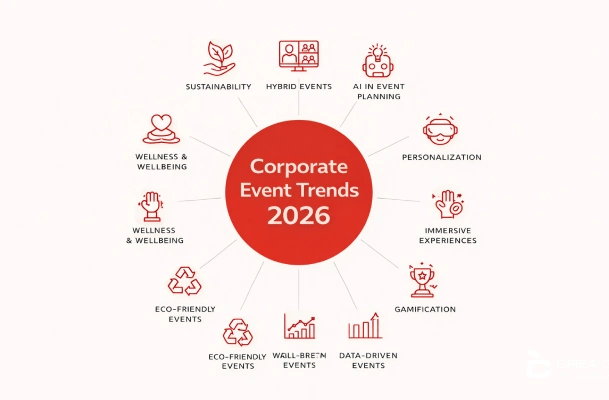
The top corporate event trends for 2026 revolve around several core themes. Below, we delve into the most prominent ones, supported by industry observations.
Sustainability in events has evolved from a nice-to-have to a must-have. More organizations are committing to eco-friendly events by minimizing waste, using digital materials, and selecting venues with green certifications. Carbon footprint tracking and plant-based catering options are becoming standard.
This trend aligns with corporate values around environmental responsibility. Events that incorporate sustainability in events not only reduce impact but also resonate with attendees who prioritize ethical practices. For planners, this means partnering with suppliers who share these commitments.
Hybrid events continue to dominate, offering flexibility for global teams. The blend of in-person and virtual elements ensures broader reach and inclusivity. Virtual and hybrid experiences allow remote participants to engage through live streaming, interactive polls, and dedicated virtual networking sessions.
As corporate event trends 2026 progress, hybrid formats will become even more seamless, treating virtual attendees as equal participants. This approach supports distributed workforces and maximizes participation without excessive travel costs.
Personalization is a cornerstone of emerging corporate event trends. Attendees expect tailored agendas, recommendations, and interactions. Tools that analyze preferences enable customized content delivery and networking matches.
This level of personalization boosts satisfaction and makes events feel bespoke, addressing the desire for meaningful connections in company event planning trends.
AI in event planning is no longer futuristic, it is practical. From content creation to real-time support and predictive analytics, AI streamlines workflows and enhances experiences. In 2026, expect wider adoption for tasks like personalized scheduling and attendee assistance.
Planners using AI in event planning can reduce administrative burdens and focus on creative aspects, leading to more innovative modern corporate event ideas.
Immersive experiences are key to capturing attention. Through theatrical elements, interactive formats, and destination-aligned designs, events become unforgettable. Gamification adds fun with challenges, rewards, and competitive elements.
These approaches elevate attendee engagement and encourage active participation, making them essential for corporate conference trends.
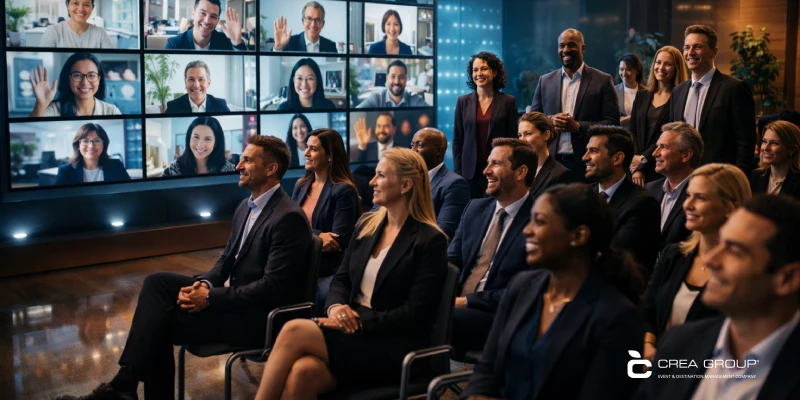
Wellness and wellbeing initiatives, such as mindfulness sessions and healthy activities, are integrated into agendas. DEI (diversity equity inclusion) considerations ensure inclusive programming. Team building trends emphasize activities that strengthen relationships.
Events incorporating these elements support employee motivation and align with organizational values.
Data-driven events rely on analytics to track engagement and outcomes. ROI measurement is critical, with tools providing insights into leads generated, satisfaction scores, and business impact.
Planners who prioritize data-driven events can justify budgets and refine future strategies.
Micro-events, smaller, focused gatherings are rising in popularity. These allow for deeper interactions and better cost control. Shorter sessions and curated agendas reflect shifting attendee preferences.
This trend suits internal team building or targeted client engagements.
Experiential marketing turns events into brand immersions. Branding becomes integrated through design layers, photo opportunities, and narrative elements.
This creates lasting impressions and strengthens company identity.
With costs increasing, strategic planning is vital. Planners navigate contracts and workloads efficiently, focusing on high-impact elements.
👉 Explore CREA Group Events' full services here
To illustrate how these trends interconnect, consider the following table comparing traditional approaches with 2026 innovations:
Aspect | Traditional Events | 2026 Trends | Benefits |
Format | Mostly in-person | Hybrid events and virtual and hybrid experiences | Greater accessibility and flexibility |
Personalization | One-size-fits-all agendas | AI-driven tailoring | Higher attendee engagement |
Sustainability | Limited eco-focus | Eco-friendly events and carbon tracking | Positive brand impact and compliance |
Technology Integration | Basic AV setups | AI in event planning and immersive tech | Efficiency and innovation |
Engagement | Passive sessions | Gamification and interactive formats | Memorable immersive experiences |
Measurement | Anecdotal feedback | Data-driven events and ROI measurement | Proven value and informed decisions |
Focus Areas | General networking | Wellness and wellbeing, DEI, team building | Employee satisfaction and inclusion |
This table highlights the shift toward more thoughtful, impactful events.
👉 Let’s talk about your next event!
Incorporating corporate event trends 2026 requires creativity, reliability, and local expertise. For organizations planning events that embody sustainability in events, immersive experiences, or personalization, partnering with a seasoned destination management company can make all the difference.
CREA Group Events specializes in transforming ideas into seamless, high-impact corporate gatherings. With a focus on creativity and flawless execution, CREA Group Events helps reduce stress while delivering experiences that achieve strong ROI measurement and attendee engagement.
If considering premium destinations for implementing these latest corporate event trends, explore specialized services in key locations. For instance, discover tailored solutions through our DMC in Madrid, DMC in Barcelona, or options in Malaga, Sevilla, Valencia, and Mallorca. These links provide insights into how local expertise can elevate hybrid events, eco-friendly events, and team building trends.
To capitalize on new trends in corporate events:
→ Start with clear objectives aligned to business goals.
→ Leverage data for personalization and post-event analysis.
→ Integrate AI in event planning early in the process.
→ Prioritize wellness and wellbeing to combat planner and attendee fatigue.
→ Choose partners who offer transparency, flexibility, and a proven track record.
By focusing on these areas, planners can create events that not only meet but exceed expectations.
The future of corporate events in 2026 promises a dynamic blend of innovation, sustainability, and human-centered design. As business event trends continue to evolve, successful planners will be those who thoughtfully integrate upcoming trends in corporate events, from interactive formats and gamification to robust data-driven events and inclusive wellness and wellbeing initiatives. These elements not only address current challenges like budget constraints and logistical complexity but also deliver tangible benefits: Higher attendee engagement, stronger ROI measurement, and lasting positive impact on participants and organizations alike.
For corporate event managers in technology, pharmaceuticals, finance, automotive, or hospitality sectors, embracing corporate event trends 2026 is no longer optional, it is the pathway to creating experiences that motivate teams, strengthen brands, and drive business success. By partnering with experienced professionals who understand both global standards and local nuances, planners can transform potential stress into seamless execution and outstanding results.
CREA Group Events remains dedicated to helping organizations navigate these changes with creativity, reliability, and a commitment to excellence. Whether planning incentives, conferences, product launches, or team-building activities, aligning with these current corporate event trends will ensure your events are memorable, measurable, and truly transformative.
The leading corporate event trends 2026 include sustainability in events, hybrid events, advanced personalization, AI in event planning, immersive experiences with gamification, and a strong focus on wellness and wellbeing, DEI (diversity equity inclusion), and data-driven events with clear ROI measurement. These trends prioritize meaningful engagement and responsible execution.
Effective ROI measurement in data-driven events involves tracking key metrics such as attendee satisfaction scores, lead generation, social media reach, post-event surveys, and business outcomes like sales influenced or employee retention improvements. Tools that integrate registration, engagement, and analytics platforms provide comprehensive insights.
Hybrid events and virtual and hybrid experiences offer inclusivity, cost efficiency, and broader reach. They accommodate global teams, reduce travel requirements, and ensure all participants, whether in-person or remote,receive high-quality interaction, making them a cornerstone of modern corporate event ideas.
👉 Are you ready for 2026? Let’s Talk!
Borja Llopart
Borja Llopart is the CEO and founder of CREA Group Events & DMC. With over 20 years of experience in the MICE industry, he specialises in organising corporate events, congresses, meetings and incentive travel programmes in Spain. He served on the Board of Directors of SITE Spain & Portugal for nearly seven years, including as President of the association, and has been a member of the Tourism Committee at Foment del Treball since 2020.
Connect with Borja on LinkedIn →
Madrid Office: Cl. de Ayala, 82, 5th Floor, Salamanca, 28001 Madrid
Find us on Google Maps
Barcelona Office: Carrer de Santaló, 10, 3-1, Sarrià-Sant Gervasi, 08021 Barcelona
Find us on Google Maps